How to Promote an Idaho Market and Keep Customers Connected After the Booth Closes
How to Promote an Idaho Market and Keep Customers Connected After the Booth Closes
A market is more than a single selling window. It is a sequence: people need to learn where you will be, decide that the visit is worth making, recognize your booth, understand the offer, and know how to find you again afterward.
Promotion works best when it supports the real customer experience. Confirm the details. Show what is relevant. Make the booth easy to recognize. Offer a straightforward way to stay connected. Follow up with something useful.
This is a practical system for Idaho makers, farmers, food producers, and other vendors—not a guarantee of turnout or sales.
Start with facts you can stand behind
Before you publish, confirm:
- Event or market name.
- Date and day.
- Opening and closing time.
- Location and any entrance or parking information you are authorized to share.
- Your booth or area, if assigned.
- What you expect to bring.
- Payment, preorder, or pickup details.
- How customers will hear about changes.
Do not announce an event because you usually attend. Confirm it. Do not list products that may not be ready. Do not imply an exclusive offer unless it exists. Accuracy is part of promotion because the customer’s first interaction with the business may be a trip based on your post.
The Happy Idaho before-market checklist is a verified vendor-facing starting point for building your own preparation routine.
Use a three-part market promotion sequence
Announcement
Publish several days ahead when possible. Include the basic logistics in the first part of the caption and add one reason the right customer may care: a seasonal product, a new batch, a useful service, or a chance to ask questions in person.
Do not make the announcement carry every detail. Link to the current schedule or explain where updates will appear.
Preparation
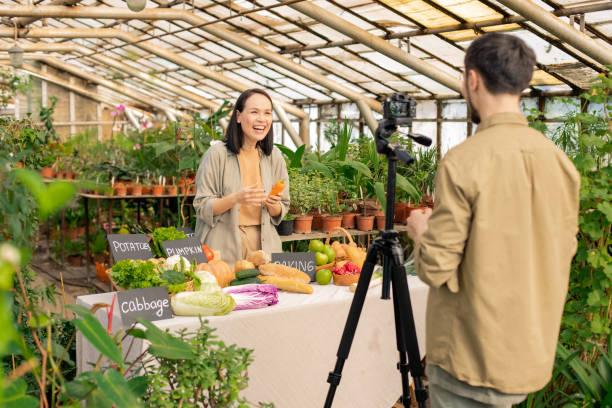
Show the work that helps people understand what they will find. Pack products, label items, prepare a display, explain a material, or share a storage note. Preparation content can be useful even to people who cannot attend because it teaches them about the business.
Use a simple phone. A clean clip of hands and products is enough if the lighting and text are clear. Avoid filming customers or private information without permission.
Reminder and live update
The day before or morning of the market, repeat the date, time, location, and what is confirmed. If you are still setting up, do not post an uncertain inventory list as a promise. If weather or event conditions change, update the place where customers are most likely to look.
A reminder should lower decision friction. It should not create anxiety with artificial countdowns or unsupported scarcity.
Make the booth do marketing work
A good table answers questions before the vendor has to repeat them. Use signs for:
- Business name and product category.
- Prices or clear pricing method.
- Ingredients, materials, care, or use information where relevant.
- Accepted payment types if customers need to know.
- Social handle or website.
- Email signup or next-market information.
Keep type large enough to read while standing a few feet away. Put the most useful answer near the product it describes. Do not cover a sign with five different QR codes; choose the next action that matters most for the market.
H3: Create one simple follow path
Happy Idaho’s market-to-follower article recommends a QR code that goes directly to the Instagram profile, with a clear sign and a natural invitation at checkout. That is a practical first bridge because people can follow while the interaction is still fresh.
If email is more important for your business, use a signup path that states what the customer will receive. Do not ask for an email address without explaining the purpose. If you offer both options, show which one is for market updates and which one is for social content.
H3: Put the next date where people can see it
A small “find us next” sign can turn a one-time purchase into a future visit. Only list dates you have confirmed. If your schedule rotates, point people to the current schedule page or profile rather than printing a calendar that will go stale.
Give the customer a reason to remember you
People remember a clear story better than a pile of claims. Choose one detail they can repeat: the product category, the process, the place, the seasonal use, or the next way to buy.
Train the booth conversation around helpful questions:
- “What are you hoping to use this for?”
- “Would you like the care or storage information?”
- “Are you looking for this week’s market schedule?”
- “Would it help to know when the next batch is expected?”
Use the answers to recommend accurately. Never turn a customer’s question into a reason to collect unnecessary personal information.
Follow up without pretending the market was something it was not
After the market, publish or email one useful note:
- What you learned about customer questions.
- How to care for or use a product.
- When the next confirmed market is.
- What is available for pickup or inquiry.
- What you are preparing next.
Thank people for stopping by without claiming a number of visitors, sales, or new followers unless you actually measured it and choose to share it. “Thanks to everyone who stopped to talk with us” is honest when people did. “We sold out in ten minutes” is a specific claim that should never be used as decoration.
If someone asked you to follow up, do it. If a person subscribed to marketing email, use the promised channel and cadence. Respect unsubscribes and keep commercial email compliant with the FTC’s CAN-SPAM guidance, including truthful identification, a valid physical address, and a clear opt-out mechanism.
Keep a market content folder
After each event, save:
- Confirmed event details.
- Current product and price notes.
- A few usable photos or clips.
- Customer questions, without personal details.
- What needs updating before the next event.
- The post or email that performed a useful job.
This becomes a small library for the next announcement. It also prevents you from relying on memory while loading the vehicle or preparing the table.
Review the system after three markets
Do not overhaul your marketing after one quiet day. After several comparable events, ask:
Did people know where to find you?
Look at questions, profile visits, direct messages, and customer comments. If people repeatedly ask for the location or time, move those details earlier in your posts and signs.
Did the booth explain the offer?
Notice which questions you repeat. Add a sign, label, or short educational post for the most common one.
Did people have an easy next step?
Check whether customers used the QR code, followed, joined the email list, or asked about the next date. If not, make the invitation more visible and more specific.
Did the follow-up help?
Measure useful replies and return questions, not only views. A follow-up that answers a real question can be successful even without a dramatic public metric.
Choose support that matches the handoff you need
If you want to do the marketing yourself but need a repeatable source of prompts, Local Launch is the Happy Idaho membership described as starting at $25/month. Its official page lists the Hook Vault, Brand Voice Workbook, monthly trending audio picks, private community, and new content. It is for vendors who want to show up themselves with tools and support; it is not described as a promise of market attendance or sales.
If the missing piece is implementation, Happy Idaho’s done-for-you page describes build services for websites, email marketing, social media systems, and interview/spotlight work. The page explains that the process begins with an intake and scope, followed by a quote before work begins. Choose that route when you need a defined project built in your voice rather than another list of tasks to carry.
A market system worth repeating
The complete loop is simple:
- Confirm the facts.
- Announce the market clearly.
- Show useful preparation.
- Make the booth easy to understand.
- Offer one clear way to stay connected.
- Follow up with something useful.
- Record what customers asked and improve the next cycle.
Your product, farm, craft, or service is the center of the story. Promotion is the bridge that helps the right people find it, understand it, and remember how to come back.
Natural CTA
For more vendor-focused tools and education, start with Happy Idaho’s resources. If you want a DIY membership built around consistent local content, review Local Launch. If you need a website, email sequence, or social system built for you, review the scope and process at Done For You.
